Domain migränefrei.de kaufen?
Wir ziehen mit dem Projekt
migränefrei.de um.
Sind Sie am Kauf der Domain
migränefrei.de interessiert?
domain@kv-gmbh.de · 0541-91531010
Domain migränefrei.de kaufen?
Will or gonna?
"Will" and "gonna" are both used to express future actions, but there are slight differences in their usage. "Will" is more formal and is used in more formal situations, while "gonna" is a more informal and colloquial way of expressing future actions. **
Gucci or Prada?
That is a subjective question and it depends on personal preference. Both Gucci and Prada are luxury fashion brands known for their high-quality products and unique designs. It ultimately comes down to individual style and taste. **

Ähnliche Suchbegriffe für OR
Top-Angebote
Produkte zum Begriff OR:

-
Doesn't or don't?
The correct form to use depends on the subject of the sentence. "Doesn't" is used with singular subjects, while "don't" is used with plural subjects. For example, "He doesn't like coffee" (singular subject) and "They don't like coffee" (plural subject). **
-
Do or make?
The choice between "do" and "make" depends on the context and the specific action being referred to. "Do" is generally used for activities or actions that involve performing or carrying out something, while "make" is used for creating or producing something tangible. For example, you would say "do your homework" but "make a cake." **
-
Naruto or Orochimaru?
It depends on personal preference. Naruto is the main protagonist of the series and is known for his determination and strong sense of justice. Orochimaru, on the other hand, is a complex character who is driven by his thirst for power and immortality. Both characters have their own unique qualities and story arcs that make them interesting in their own ways. **
-
Do or does?
The choice between "do" and "does" depends on the subject of the sentence. "Do" is used with plural subjects and "does" is used with singular subjects. For example, "They do their homework" and "She does her homework." **


Anyway or anyways?
Both "anyway" and "anyways" are commonly used in spoken English to mean the same thing. However, "anyway" is more widely accepted and considered to be the standard form. "Anyways" is often considered to be more informal or colloquial. **
Go or goes?
The correct form would depend on the subject of the sentence. "Go" is used with the pronouns "I," "you," "we," and "they," while "goes" is used with the pronouns "he," "she," and "it." For example, "I go to the store" and "She goes to the store." **
Top-Angebote
Produkte zum Begriff OR:
-
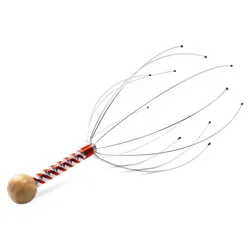
Kopfmassagegerät HM6 Ayurveda Spinne Entspannung Stressabbau 4FIZJO# **Ayurvedischer 4FIZJO-Kopfmassagegerät** --- ## **Ayurvedischer 4FIZJO-Kopfmassagegerät** **Entspannung**, **zur Linderung von** **Spannungen** **und Kopfschmerzen** sowie **zur Pflege schöner Haare**. Das **ayurvedische 4FIZJO-Kopfmassagegerät** ermöglicht dir, direkt nach einem anstrengenden Arbeitstag schnelle Erleichterung zu erfahren. Regelmäßige **Kopfhautmassagen** sind außerdem eine bewährte Methode, um das **Haarbild** zu **verbessern** und das **Haarwachstum** zu **fördern**. Kombiniere dein Lieblings-Haartonikum mit dem ayurvedischen Massagegerät, und nach wenigen Wochen wirst du erste neue Haare bemerken. Das Beste: Die Massage kannst du jederzeit und überall selbst durchführen. --- ### **Parameter:** * **Material:** Holz und Metall * **Abmessungen:** 20×8 cm * **Anzahl der Massage-Noppen:** 12 --- ## **Wesentliche Eigenschaften:** * Das **Haar verheddert sich nicht** in den Metallteilen des Massagegeräts. * Der **Holzgriff** **liegt stabil und komfortabel in der Hand**. * **Weiche Enden** **der Massage-Noppen** schonen die empfindliche Kopfhaut. * Das Massagegerät kann sowohl **trocken** als auch **nass** während der Haarwäsche verwendet werden. --- ## **Ayurvedische Massage und Haarwachstum:** Neben **Masken**, **Conditionern** und **Tonika** ist eine **regelmäßige** **Kopfhautmassage** entscheidend für die **Gesundheit der Haarfollikel**. **Gut durchblutete und mit Nährstoffen versorgte Haarwurzeln fördern kräftiges, gesundes Haarwachstum**. Die Anwendung des Massagegeräts **steigert die** **Mikrozirkulation** **der Kopfhaut**, sodass mehr Sauerstoff und Nährstoffe – auch aus Haarpflegeprodukten – an die Wurzeln gelangen. Erste Ergebnisse treten zwar nicht sofort ein, aber die regelmäßige Anwendung lohnt sich. --- ## **Stress, Kopfschmerzen oder Schlafprobleme? Sag ihnen NEIN!** Das schnelle Lebenstempo und die täglichen Herausforderungen führen oft zu Dauerstress, Muskelverspannungen, Kopfschmerzen und Schlafproblemen. **Regelmäßige ayurvedische Kopfhautmassagen** **wirken entspannend, lösen Verspannungen in Kopf und Nacken und fördern ein besseres Einschlafen**. Die zwölf Massage-Noppen arbeiten zweifach: Die langen Noppen erreichen die Schläfenhöhe, während die kürzeren die Kopfhaut stimulieren. Dies erzeugt nicht nur einen entspannenden, sondern auch einen beruhigenden und schlaffördernden Effekt.6,99 €*Versand: 4,99 €Sichere Weiterleitung zum Anbieter
-
Will or gonna?
"Will" and "gonna" are both used to express future actions, but there are slight differences in their usage. "Will" is more formal and is used in more formal situations, while "gonna" is a more informal and colloquial way of expressing future actions. **
-
Gucci or Prada?
That is a subjective question and it depends on personal preference. Both Gucci and Prada are luxury fashion brands known for their high-quality products and unique designs. It ultimately comes down to individual style and taste. **
-
Doesn't or don't?
The correct form to use depends on the subject of the sentence. "Doesn't" is used with singular subjects, while "don't" is used with plural subjects. For example, "He doesn't like coffee" (singular subject) and "They don't like coffee" (plural subject). **
-
Do or make?
The choice between "do" and "make" depends on the context and the specific action being referred to. "Do" is generally used for activities or actions that involve performing or carrying out something, while "make" is used for creating or producing something tangible. For example, you would say "do your homework" but "make a cake." **
Ähnliche Suchbegriffe für OR
-
tredition Sadhu Board - Wie Nagelbrett-Stehen Deine Gesundheit Verbessert: Natürliche Schmerzlinderung Stressabbau & Mehr Energie Durch Uraltes Wissen (Energy Board Guide Inkl. Übungen & 30-Tage-Challenge)Sadhu Board - Wie Nagelbrett-Stehen deine Gesundheit verbessert: Natürliche Schmerzlinderung Stressabbau & mehr Energie durch uraltes Wissen (Energy Board Guide inkl. Übungen & 30-Tage-Challenge). Madeleine Wilson. Taschenbuch.18,99 €*Versand: 3,95 €Sichere Weiterleitung zum Anbieter
-
Rainer Strebel - Die individuelle Therapie. Ein neuer Weg zu Gesundheit und Wohlbefinden - Preis vom 22.11.2026 20:23:25 hBinding : Gebundene Ausgabe, Label : AT Verlag, Publisher : AT Verlag, Format : Restexemplar, medium : Gebundene Ausgabe, numberOfPages : 168, publicationDate : 2005-02-01, authors : Rainer Strebel, Michael Gienger, languages : german, ISBN : 303800216X8,49 €*Versand: 0,00 €Sichere Weiterleitung zum Anbieter
-
Naruto or Orochimaru?
It depends on personal preference. Naruto is the main protagonist of the series and is known for his determination and strong sense of justice. Orochimaru, on the other hand, is a complex character who is driven by his thirst for power and immortality. Both characters have their own unique qualities and story arcs that make them interesting in their own ways. **
-
Do or does?
The choice between "do" and "does" depends on the subject of the sentence. "Do" is used with plural subjects and "does" is used with singular subjects. For example, "They do their homework" and "She does her homework." **
-
Anyway or anyways?
Both "anyway" and "anyways" are commonly used in spoken English to mean the same thing. However, "anyway" is more widely accepted and considered to be the standard form. "Anyways" is often considered to be more informal or colloquial. **
-
Go or goes?
The correct form would depend on the subject of the sentence. "Go" is used with the pronouns "I," "you," "we," and "they," while "goes" is used with the pronouns "he," "she," and "it." For example, "I go to the store" and "She goes to the store." **
* Alle Preise verstehen sich inklusive der gesetzlichen Mehrwertsteuer und ggf. zuzüglich Versandkosten. Die Angebotsinformationen basieren auf den Angaben des jeweiligen Shops und werden über automatisierte Prozesse aktualisiert. Eine Aktualisierung in Echtzeit findet nicht statt, so dass es im Einzelfall zu Abweichungen kommen kann. ** Hinweis: Teile dieses Inhalts wurden von KI erstellt.